
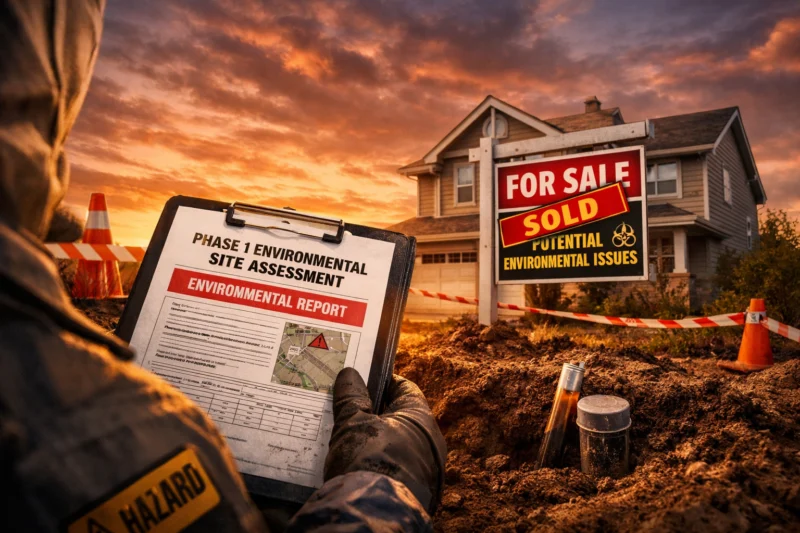
If you’re wondering whether a Phase 1 ESA will help you sell—or block the deal—here’s the practical answer: a Phase 1 ESA primarily affects how buyers and lenders perceive risk, which in turn shapes pricing, contingencies, repair expectations, and closing confidence. In real transactions, selling property with a phase 1 ESA is often less about getting a clean “pass/fail” and more about reducing uncertainty early enough that contract terms don’t spiral. In this 2026 guide, we’ll explain what Phase 1 ESAs are designed to do (and not do), how their outcomes influence financing and insurance, and what sellers typically can control before and during negotiations. You’ll also see how standards such as ASTM E1527-21 and the statutory basis for All Appropriate Inquiries (40 CFR Part 312 (AAI)) connect to the concept of “recognized environmental conditions” (RECs) and to buyer defensibility.
What a Phase 1 ESA is—and why it matters to a property sale decision
A Phase 1 ESA can materially influence whether and how you can sell a property because it frames environmental risk in a documented, auditable way for buyers, lenders, and insurers. It does not “test for contamination” the way a Phase 2 does; instead, it compiles evidence from records and site observations to identify recognized environmental conditions (RECs) and any information gaps that could require more work. That risk framing is what drives negotiation outcomes after the report is delivered.
In plain language, a Phase 1 ESA is a due-diligence assessment that evaluates likely historical sources of contamination based on how the property has been used over time and what is visible during the site . The report process is designed to support defensible decision-making: if the Phase 1 concludes there are RECs, the buyer has a reason to request further investigation or mitigation; if there are no RECs, the seller can often present a clearer risk narrative. Either way, the report changes how other parties feel about “what they’re stepping into,” which can affect lender underwriting, escrow conditions, and insurance willingness to bind coverage.
Under ASTM E1527-21 and the All Appropriate Inquiries framework (40 CFR Part 312 (AAI)), Phase 1 conclusions are tied to evidence quality and to what the evaluator could verify. That matters because a Phase 1 report is not a guarantee that contamination doesn’t exist; it’s a structured opinion about whether conditions meet the threshold of “recognized environmental conditions” based on the available information. Even when no RECs are identified, buyers may still raise concerns if records are incomplete or if the report notes limitations or user-provided information that could not be fully verified.
A useful way to think about sale impact is to separate three outcomes: (1) no RECs, (2) RECs identified, and (3) information gaps (for example, unable to interview a key party, missing historical land-use documentation, or limited access). “No findings” and “no RECs” are not always treated the same in negotiations, because lenders and insurers may focus on uncertainty and underwriting conservatism. Common real-world scenario: a buyer may accept a “no RECs” conclusion, but still require a tenant-risk questionnaire or confirmation of heating fuel type, because those items influence insurability even when the Phase 1 doesn’t flag a REC.
For authority context, it’s helpful to anchor your expectations in the standards that define the evidentiary approach. ASTM E1527-21 is the commonly referenced Phase 1 framework, and the federal All Appropriate Inquiries rule is described through 40 CFR Part 312 (AAI) in the U.S. Environmental Protection Agency’s guidance materials., for example, EPA’s overview of All Appropriate Inquiries: U.S. EPA All Appropriate Inquiries and the related ASTM standard naming used widely in industry reporting. ASTM International E1527
Deeper insight: What many guides get wrong is treating Phase 1 like a binary contamination detector. In practice, the sale outcome often hinges on how uncertainty is expressed. Edge case: a Phase 1 may identify “potentially” relevant conditions based on historical records (for example, a former dry-cleaning operation), but the report may also note limited evidence due to missing permits or inaccessible archives. That combination can lead to “buyer caution” even if sampling isn’t recommended in the report, because lenders may prefer to close with confirmatory data before releasing funds.
How Phase 1 outcomes shape buyer confidence, contract terms, and closing paths
The Phase 1 ESA outcome typically shapes the transaction in three main ways: (1) buyer confidence, (2) the structure of contractual contingencies, and (3) whether the closing path stays “routine” or becomes a risk-managed process. A report that identifies RECs often increases the chance of price negotiations, scope disputes, and conditional financing requirements. Meanwhile, a “no RECs” report can still lead to follow-up questions if the buyer or lender perceives limitations or residual uncertainty.

Most deals react differently depending on the report pattern. If the Phase 1 identifies no RECs and reports adequate record review, buyers often treat the report as a risk-reduction tool. They may proceed with standard due diligence and focus on unrelated inspection items (roof, structural, zoning). Practically, sellers can use a strong “no RECs” report to reduce how much time the buyer spends re-underwriting environmental risk, which helps prevent environmental contingencies from becoming open-ended.
If the Phase 1 identifies RECs, buyers generally respond by seeking additional information or limiting uncertainty through contract language. Typical levers include asking for targeted Phase 2 testing, requesting documentation of prior remediation, negotiating an escrow holdback for potential remediation, or adding indemnity language tied to the identified conditions. Contract terms may shift from “buyer-friendly” to “risk-allocated,” and lenders may require their own review of environmental documents before committing funds.
If the Phase 1 reports RECs plus information gaps, the effect is often more complicated. Even if the identified concern is not definitive evidence of contamination, the gap can be enough for lenders to require confirmatory investigation. Real-world scenario: a Phase 1 flags potential historical chemical use and notes that one former operator could not be interviewed and several historical permits were unavailable. In that case, a buyer may insist on sampling or on a documented closure verification strategy to convert “unverified concern” into “substantiated risk.”
Beyond the report conclusions, the wording and scope matter. Phrases like “potential,” “historical,” “limited evidence,” or “controlled use” can change how cautious parties interpret the risk. A seller who submits the report without supporting documents (for example, prior closure letters, updated tenant use logs, or utility records) may trigger more friction than a seller who proactively provides context consistent with the Phase 1’s stated basis.
Deeper insight: Most people underestimate how “defensibility” influences negotiations. Buyers and lenders don’t only evaluate whether a REC exists; they evaluate whether the Phase 1 meets their expectations of thoroughness and whether the report’s assumptions are reasonable for the property’s actual history. A common mistake is to argue with the report instead of addressing the underlying fact pattern—such as correcting property address records, clarifying changes in site use, or supplying missing contacts that align with what the Phase 1 says was needed.
Internal-linking awareness: If your broader content strategy covers document readiness and credibility signals, consider pairing this article with materials on “document collection checklists for real estate” and “risk communication for property disclosures,” so readers can act on what the Phase 1 report implies.
The decision process: when sellers should commission (or refresh) a Phase 1 before marketing
You don’t always need a Phase 1 before listing, but commissioning one (or refreshing it) at the right moment can prevent environmental uncertainty from derailing a deal after buyers have already invested time and money. Sellers should think of timing as part of the negotiation strategy: the earlier the report is available, the more likely you can control how contingencies are structured. Conversely, commissioning too early—or failing to update it—can create fresh information gaps that buyers later treat as a reason to re-scope.
In 2026, many transactions follow a predictable cadence: listing and buyer interest lead to offers, offers lead to underwriting requests, and underwriting triggers lender or insurer diligence. If the Phase 1 is available at the offer stage, buyers can often assess risk immediately and decide whether to include an environmental contingency. If the Phase 1 arrives only after a contract is signed, buyers may respond by demanding changes to the deal structure because they can’t manage environmental risk until the report lands.
“Freshness” is not one universal number for all markets. Instead, it depends on how much the property’s history or conditions may have changed and how lenders underwrite documentation timelines. For example, a property with stable use (like owner-occupied residential or long-term commercial tenancy) may be able to reuse older documentation if the records remain valid and the site condition hasn’t changed. But if the property experienced tenant turnover, new construction, a change in heating systems, or new site development, an older Phase 1 may not reflect current facts, and buyers may request updates.
To select a Phase 1 provider, sellers should look for an experienced environmental professional who can demonstrate adherence to ASTM E1527-21 expectations and who can produce clear documentation. Practical evaluation criteria include whether the report contains a robust record search narrative, transparent sources, well-supported interviews (or documentation of unsuccessful interviews), and accurate property history summaries. Sellers can also improve defensibility by gathering site documents ahead of time—such as prior environmental reports, permits, utility records, leases, and any remediation or closure documentation the seller already holds.
Deeper insight: A common mistake is commissioning too early and then assuming the report remains “good enough” without revisiting the site history. Edge case: a Phase 1 completed before a new tenant’s operations begins may omit relevant operational facts, even if the property’s physical visit looks normal at the time of the assessment. When buyers later discover the new use involves activities with environmental relevance (for example, warehousing of chemicals, vehicle maintenance, or specialty cleaning), the Phase 1 may be challenged as having an incomplete user history. In that scenario, “refreshing” may mean adding updated interviews and records review rather than redoing everything from scratch.
Achieving a smoother transaction: practical steps tied to Phase 1 ESA findings
A smoother transaction happens when your response to the Phase 1 is proportionate, documented, and aligned with what the report actually concludes. The most effective approach is an “if/then” plan: use the report outcome to decide whether you can position the deal as low uncertainty, whether you need targeted supplemental work, or whether you must address information gaps before buyers escalate demands.
If the Phase 1 identifies no RECs, present the report neutrally and clearly, emphasizing that the assessment was completed using the recognized framework and that sources and interviews were addressed to the extent expected. Practical seller action: provide the full report package to the buyer promptly and be ready to answer straightforward questions about scope limitations, site access, and the basis for record searches. This is where sellers often prevent unnecessary re-underwriting by helping the buyer understand what the report does and does not cover.
If the Phase 1 identifies RECs or concerns, your goal is to reduce negotiation friction by proposing next steps that match the identified risk level. A realistic plan might include commissioning a targeted Phase 2 for specific flagged areas, collecting documentation of prior mitigation, or preparing a mitigation feasibility narrative that helps buyers and lenders decide how to structure risk. You’ll typically need to coordinate with environmental professionals so any additional work is consistent with what the Phase 1 flagged, rather than “blanket” investigation that expands uncertainty and costs.
If the Phase 1 notes information gaps, focus on closing the gaps quickly. That can mean providing missing contacts for interviews, supplying additional historical documents, granting better access for records review, or clarifying tenant operations. Practically, documentation updates matter: buyers may not object to the fact that information was initially unavailable; they object to information that remains unresolved at decision time.
Communication matters as much as the work. Share key findings in context using the report’s language, including references to controls, historical records, and regulatory status when the report supports them. Avoid over-claiming—if the Phase 1 doesn’t provide conclusions about contamination absence, don’t market it as a “clean bill of health.” Tradeoff: the more you try to persuade instead of document, the more likely the buyer’s counsel will treat your materials as advocacy rather than evidence.
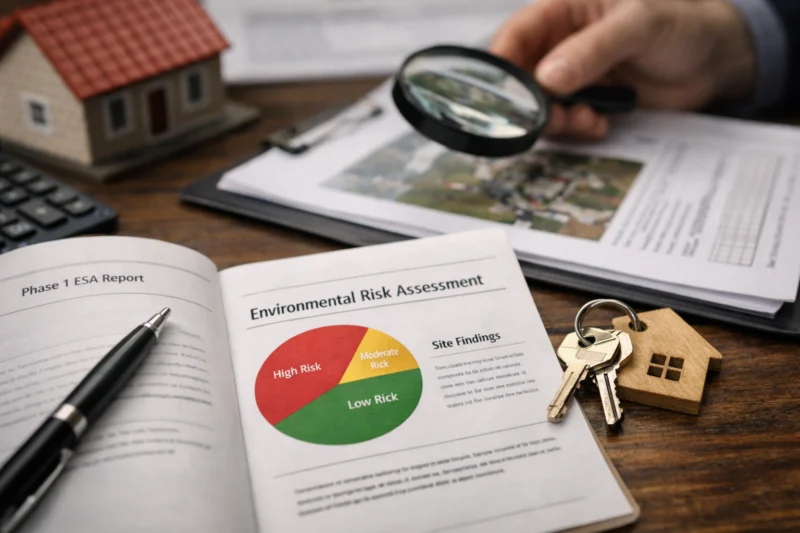
Deeper insight: Edge case—REC flagged outside your timeline. Sometimes the report flags an issue that the seller believes is not within their period of responsibility or is tied to historical use by a previous owner. In these cases, risk allocation becomes a negotiation centerpiece. A Phase 1 can still help by showing what was known, what was assessed, and what additional steps (if any) are proposed. The buyer’s next steps may be contractual, not just technical—such as agreeing to certain disclosures while structuring indemnity or escrow to reflect historical uncertainty.
Common misconceptions and pitfalls that delay or jeopardize sales after a Phase 1 ESA
Many Phase 1 problems in real transactions come from misunderstandings about what the report means. The biggest misconception is that Phase 1 results eliminate environmental risk. The second is that Phase 1 automatically satisfies lender and insurer requirements. In reality, Phase 1 influences decision-making, but each party still applies its own underwriting logic and risk tolerance.
Misconception #1: “No REC means no contamination risk.” A Phase 1 is a structured due diligence assessment; it cannot guarantee there is zero contamination. A “no RECs” outcome may indicate that evidence did not support REC thresholds at the time of the assessment, but it doesn’t prove the absence of every possible condition. Practical tradeoff: buyers who are risk-averse may still require confirmatory documentation if the site history includes high-signal uses like industrial operations, fueling, dry cleaning, or other activities that commonly draw scrutiny.
Misconception #2: “A Phase 1 automatically clears the property for lending/insurance.” Lenders and insurers often reserve discretion and may require additional environmental information depending on the transaction structure, collateral type, and the property’s intended use. Even with no RECs, a lender may want to see clarity on heating systems, underground storage, or prior remedial actions. For sellers, this means you can’t treat Phase 1 as the final answer—only as a strong first risk narrative.
Pitfalls often include inadequate scope or weak documentation. If the Phase 1 report appears to miss obvious record sources, lacks interview support, or documents information gaps without clear explanation, buyers may request a re-scope or supplemental investigation. Handling user-provided information poorly is another issue: missing contacts, vague land-use history, or incomplete tenant operations data can convert uncertainty into a negotiation weapon for the buyer.
Deeper insight: The “information gap” problem is frequently misunderstood. Buyers don’t always need a REC to be worried; they can worry when the Phase 1 shows that critical history couldn’t be verified. Edge case: a Phase 1 notes that certain records were unavailable due to “no response” from an identified contact. If the buyer later finds evidence that the prior operations involved relevant chemical use, the buyer may argue the seller didn’t do enough upfront to remove uncertainty, even if the Phase 1 didn’t list a REC. Most guides focus on REC presence, but in practice the defensibility of the process and the clarity of limitations often matter just as much.
Comparisons and alternatives: how sellers decide between Phase 1, Phase 2, and other approaches
Sellers typically choose among Phase 1, Phase 2, and other environmental approaches based on what decision they need to support—not on a fixed “one size fits all” rule. In many cases, a Phase 1 is enough to create confidence and move the deal forward; in others, a Phase 1 is the starting point that identifies where targeted Phase 2 or supplemental work can convert uncertainty into underwriting-ready evidence. Even when a seller is selling property with a phase 1 ESA, it’s normal that some transactions still require Phase 2 depending on the report’s findings and the buyer’s lender/insurer requirements.
Approach 1: Phase 1 ESA alone with disclosure and contingency management. This is often appropriate when the Phase 1 concludes no RECs, the report documents sources clearly, and there are no high-signal historical uses that trigger typical lender scrutiny. Sellers use this approach by providing the full report package at the offer stage and by managing buyer expectations about what the report covers.
Approach 2: Phase 1 followed by Phase 2. Phase 2 becomes appropriate when the Phase 1 flags RECs with sufficient confidence that additional data is required to support risk allocation, financing, or insurance. It can also be used when buyers and lenders insist on confirmatory evidence before proceeding. The negotiation impact is often significant: Phase 2 can reduce uncertainty enough to convert contingencies into more straightforward closing conditions—or it can reveal enough to support price adjustments and remediation planning.
Approach 3: Targeted supplemental investigation / feasibility work. Instead of broad sampling everywhere, sellers can commission targeted work focused on flagged areas or specific suspected pathways. This can limit cost and scope expansion while still addressing the information that triggered buyer/lender concern.
Approach 4: Brownfield/regulatory-aligned documentation strategies (when applicable). For properties with prior oversight, permits, or closure documentation, sellers may focus on producing regulatory-aligned evidence that addresses the buyer’s underwriting questions. This can be more efficient than broad fieldwork when the historical record is strong and properly documented.
Deeper insight: The tradeoff is that more investigation can reduce uncertainty but can also expand disclosure concerns and negotiation complexity. A thoughtful strategy balances evidence needs with the buyer’s decision point. Common mistake: commissioning Phase 2 too broadly “just to be safe,” which can generate findings that create new issues without necessarily addressing the lender’s specific underwriting questions. Another mistake is treating the Phase 1 conclusion as an absolute—rather than recognizing that buyers and lenders sometimes require additional data even when the Phase 1 doesn’t list the highest-risk REC scenario.
Advanced considerations: scope boundaries, AAI compliance, objections, and edge-case scenarios
Understanding Phase 1’s scope boundaries—and how they tie back to All Appropriate Inquiries (AAI)—helps sellers respond to objections without escalating disputes. AAI is the intent behind using recognized due diligence to make decisions based on appropriate evidence, and it supports defensibility when a seller can show how the Phase 1 was performed under expected frameworks. While AAI does not eliminate all environmental risk, it can influence how the transaction risk narrative is received by buyers and their lenders.
Scope boundaries are where conflicts usually begin. For example, Phase 1 typically focuses on the property within the defined assessment scope and on relevant historical and current information. Adjacent property conditions, historical fill, landfill-like materials, vapor migration considerations, and other complex issues can be discussed or flagged depending on available evidence—but the report cannot prove causation without additional investigations. This can lead to buyer objections such as “Why didn’t it investigate X?” The best seller response is not defensive argument; it’s a structured explanation of what the Phase 1 could reasonably conclude based on records, observations, and documented limitations.
Objections often take the form of wording disputes. A buyer may claim the Phase 1 “doesn’t match understanding,” especially if the report uses terms like “potential” or “limited evidence” while the buyer expects a more definitive conclusion. Sellers can address this by requesting clarifications from the environmental professional or by providing documents that correct the underlying assumptions. Practical application: if the Phase 1’s record search identified older addresses inaccurately or missed a known permit history, supplying the corrected sources can help. If that information truly changes the facts, then supplemental work may be the honest fix rather than a debate over semantics.
Who pays and who decides are also practical realities. In many deals, the buyer drives the next step once it sees RECs or limitations, but the seller may negotiate who funds supplemental investigation and whether remediation obligations fall under the seller’s timeline. The Phase 1 report provides the factual basis for those arguments, which is why the quality of the record review and the clarity of assumptions matters.
Deeper insight: Edge cases in 2026 transactions can invalidate assumptions from an older Phase 1. New construction can change site conditions and create a mismatch between observed conditions and historical records. Tenant turnovers can introduce new operational histories that weren’t part of the original interview set. Also, redevelopment projects can alter access and documentation availability. Most guides don’t highlight how these changes can create “silent” information gaps that then reappear as negotiation obstacles when buyers tighten their underwriting requirements.
For AAI framing, it helps to review EPA’s AAI resources and the environmental due diligence purpose described there. : U.S. EPA All Appropriate Inquiries. And for the standardized Phase 1 approach referenced in the industry, the ASTM standard naming provides the framework context: ASTM International E1527.
Geographic and regulatory context: what changes when selling in different states
While the federal standards behind Phase 1 and AAI provide a consistent baseline, state-level rules and market practices can significantly change how buyers interpret Phase 1 results. In some jurisdictions, disclosure forms, transfer requirements, and state environmental program expectations can affect what a buyer believes is “enough” evidence to proceed. That means the same Phase 1 outcome may lead to different negotiation intensity depending on location.
Because state environmental programs vary, sellers should verify state-specific disclosure timelines and any reporting obligations tied to property transfers. Even when ASTM E1527-21 and AAI compliance underpin the Phase 1 process, downstream requirements—such as how a state program wants closure or oversight documentation handled—can alter the buyer’s next step. Practically, sellers should also confirm whether there are local expectations around reporting to oversight agencies or using specific state environmental covenant/closure record systems.
Another location-driven factor is lender and insurer behavior. In markets where lenders are accustomed to certain state program pathways, they may require particular forms of documentation. In others, lenders may lean heavily on the Phase 1 narrative and only request supplemental investigation when RECs or information gaps suggest higher uncertainty. Sellers can reduce friction by ensuring their Phase 1 documentation aligns with what local parties treat as credible evidence.
Deeper insight: The risk of relying solely on the federal standard language is that it can sound “complete” while local practice expects more. Edge case: a Phase 1 might reference RECs based on historical records, but state-level documentation systems may have additional closure or oversight filings that were not summarized in the Phase 1. Buyers familiar with those systems may question why their team wasn’t pointed to those sources, even if the Phase 1 was technically performed according to the ASTM/AAI framework. The best response is usually not arguing about standard compliance, but supplementing with the state-relevant evidence that fits the buyer’s underwriting expectations.
Internal-linking awareness: If your site also publishes region-by-region compliance explainers, this section can pair well with “real estate compliance checklists” and “how to prepare for buyer due diligence,” helping readers connect environmental reports to the transaction documents they’ll actually sign.
Frequently Asked Questions About Understanding the Impact of Phase 1 ESAs on Selling Properties
Does a Phase 1 ESA guarantee a property will sell without environmental issues?
No. A Phase 1 ESA helps frame environmental risk, but it does not guarantee there are no contamination-related issues or that a deal will avoid environmental contingencies. Buyers, lenders, and insurers may still require additional information depending on the property’s history, underwriting guidelines, and the report’s noted limitations.
What happens if the Phase 1 ESA identifies a recognized environmental condition (REC)?
If RECs are identified, buyers commonly negotiate for additional investigation (often a Phase 2), remediation planning, or documentation of prior mitigation. You may also see escrow holdbacks or indemnity language in the contract to manage uncertainty. The exact outcome depends on the nature of the REC, the evidence quality, and the lender/insurer risk posture.
How does ASTM E1527-21 affect what buyers expect from a Phase 1 report?
ASTM E1527-21 is the standard framework many buyers and lenders expect the Phase 1 to follow, including how records are reviewed and how observations and interviews are documented. When a report aligns well with the standard, it tends to be easier for buyers to accept as defensible. When it departs from expected practices or leaves critical questions unresolved, buyers may request re-scoping or supplemental work.
What does “All Appropriate Inquiries” (40 CFR Part 312 (AAI)) mean for sellers?
AAI reflects the intent to use recognized due diligence methods that support informed decisions and defensibility. Sellers who commission Phase 1 ESAs consistent with AAI principles can better demonstrate that they relied on an appropriate evidentiary process. AAI is not a shield against all risk, but it can influence how parties evaluate whether the seller acted responsibly.
Should I commission a Phase 1 ESA before listing, or only after a buyer requests it?
Commissioning before listing can help you control the narrative and reduce the chance that environmental contingencies become negotiation flashpoints. Waiting until after a buyer requests it may be acceptable in low-risk markets, but it can increase the risk that the buyer slows underwriting or asks to renegotiate once the report is delivered. Timing also depends on whether your property’s use or access conditions have changed.
Can I sell a property if the Phase 1 has information gaps or limited access issues?
Yes, but information gaps can reduce buyer confidence and increase the likelihood of supplemental investigation requests. The report should clearly describe what was not verified and why. Sellers can often improve acceptance by closing gaps through better documentation, updated interviews, or targeted follow-up work.
Will a lender require Phase 2 after a Phase 1 ESA shows concerns?
Sometimes, but not automatically. Lenders apply their own underwriting standards, and what triggers Phase 2 varies by the perceived risk level, loan structure, and intended use. If the Phase 1 identifies RECs with uncertainty or highlights missing data, lenders may ask for targeted Phase 2 evidence to support collateral risk decisions.
How long is a Phase 1 ESA considered “current” for a real estate transaction?
There is no single universal “expiration” rule that applies to every market and lender. Instead, freshness depends on factors such as changes in property use, site conditions, tenant operations, and the availability of updated records. Many parties reassess whether an older report still reflects current facts when underwriting or insurability questions arise.
What does it mean if the Phase 1 concludes “no recognized environmental conditions,” but concerns still come up?
It means the evidence available at the time didn’t meet the Phase 1 threshold for RECs, but buyers can still have concerns about uncertainty, residual risk, or unresolved limitations. Those concerns may relate to gaps, skepticism about records, or underwriting requirements that extend beyond Phase 1 conclusions. In that situation, buyers may request clarifications or supplemental work rather than rejecting the report outright.
What should a seller do to reduce friction during negotiations after receiving a Phase 1 ESA?
Share the report promptly and explain it neutrally using the report’s own conclusions and stated limitations. Provide supportive documents that correct or contextualize records, such as leases, utility records, permits, or prior remediation documentation. Propose next steps that match the findings—whether that is targeted investigation, documentation compilation, or gap closure—to keep the negotiation structured.
How do Phase 1 ESAs impact price negotiations versus liability negotiations?
Price negotiations usually reflect economics: what additional work might cost, what escrow may be required, and how uncertainty affects buyer willingness to pay. Liability negotiations address legal risk allocation through contract language such as indemnities, limitations of liability, and disclosure responsibilities. A Phase 1 can influence both, but parties often separate economic concessions from legal risk terms.
Conclusion
Understanding the impact of Phase 1 ESAs on selling properties is less about “winning” a report and more about managing the risk story that buyers, lenders, and insurers rely on to decide whether to proceed. Phase 1 outcomes influence buyer confidence, then flow into contract terms, contingencies, and the realism of closing on your original timetable. Whether your report identifies RECs, finds none, or documents information gaps, the way you respond determines how much uncertainty remains when underwriting starts tightening.
For preparedness in 2026, commission or refresh a Phase 1 at the right time, reduce avoidable omissions by supplying consistent site history documents, and communicate findings with precision. If the report points to RECs or limitations, be ready to choose the next step that best matches the risk signal—Phase 1-only positioning in low-risk patterns, targeted supplemental investigation when uncertainty needs to be converted into evidence, or Phase 2 when buyers and lenders require confirmatory data.
As a practical next step, review the Phase 1 for scope, wording, and assumptions, then develop a negotiation-ready plan before buyers escalate demands. If you want to avoid surprises later, consult an experienced environmental professional and (where relevant) a real estate attorney to align disclosures and contract language with what the report actually supports. Finally, share a clear, organized response package so the buyer can make a decision without re-litigating basics—because that’s what protects both deal certainty and your leverage.
Updated August 2026