
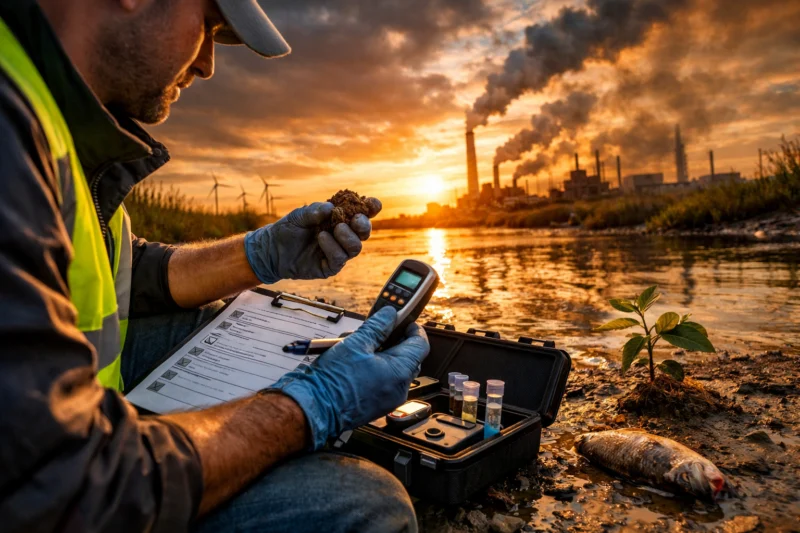
Choosing a green-friendly environmental consultant is less about marketing and more about defensible methods, the right scope for your site, and clear documentation you can stand behind. If you’re asking how to choose an environmental consultant, this guide will help you compare candidates using evidence-based criteria—so your “green ally” actually reduces risk, supports compliance, and supports real sustainability goals. In 2026, buyers, lenders, and regulators increasingly expect traceable records, modern field documentation, and reporting that aligns with recognized frameworks like ASTM E1527-21 and All Appropriate Inquiries under 40 CFR Part 312 (AAI). Use the checklist and decision path below to ask better questions, verify technical competence, and prevent costly mismatches between consultant promises and project needs.
Match your project’s real needs before you compare consultant “green” claims
The first step in selecting the right environmental consultant is to match the scope to your property’s risks and your project’s end goals—not to the consultant’s branding. Many “green” claims sound impressive, but the right fit comes from understanding what decisions your project must make (and what evidence will be needed to make them confidently).
Start by clarifying what you actually need. A property transaction may require a Phase I Environmental Site Assessment (ESA) for due diligence, while redevelopment of an older industrial facility might require Phase II sampling, remediation planning, or monitoring. Some organizations also need environmental product verification or sustainability-related risk screening, which is different from environmental assessments tied to regulatory decision-making. If you skip this step, you can accidentally pay for irrelevant work—or worse, receive a scope that looks thorough on paper but doesn’t produce the evidence your stakeholders require.
How this works in practice is simple: you define your decision endpoints first, then request deliverables that directly support those endpoints. For example, a buyer or lender might need a defensible baseline understanding of recognized environmental conditions (RECs), data sources, and limitations. A redevelopment team might need sampling design tied to site conditions and planned receptors (like construction workers, occupants, or nearby groundwater). A consultant who can translate your goals into a clear, bounded scope is usually the one most likely to deliver a report that others can rely on.
Practical application: create a “need versus want” worksheet before outreach. Needs are what you must obtain to move forward (assessment level, sampling, permitting inputs, monitoring, or documentation for compliance). Wants are often sustainability-adjacent outcomes (e.g., stakeholder confidence, reduced future contamination liability, or better reuse planning). A consultant’s “green” process should support the needs—such as choosing sampling locations based on evidence, documenting uncertainty honestly, and helping you prioritize actions that reduce environmental impact—rather than replacing technical rigor.
Tradeoffs matter. “More comprehensive” is not automatically better; the correct scope depends on property history, site conditions, and reuse plans. Common failure mode: a consultant proposes extra investigations to satisfy uncertainty without first identifying what decision you’re trying to make. Another common mistake is confusing environmental consulting with general sustainability consulting; those disciplines can overlap, but they answer different questions.
Build a decision path that clarifies the right assessment level (and avoids scope traps)
A reliable way to choose a consultant is to follow a decision path that starts with your risk questions and ends with the defensible next step—not with the most expensive deliverables. This approach helps you compare firms on substance: how they size the work, how they justify boundaries, and how they turn evidence into recommendations.
Begin with a fit checklist: what deliverables you may need (Phase I, Phase II, remediation support, compliance strategy, monitoring plan inputs, or other technical documentation) and what outcomes you want (risk reduction, sustainable reuse, smoother stakeholder discussions). Then map your property type to likely deliverables. For instance, a long-standing residential property in a low-industrial area might need a straightforward Phase I approach, while an older manufacturing site with undocumented fill and nearby utilities may warrant a more targeted Phase II strategy after initial findings.
Then follow a step sequence during procurement: scope → background records review → field approach → reporting → QA/QC → regulatory alignment → stakeholder communication. A consultant who can explain each step and why it matters is doing more than writing a report; they’re building a defensible audit trail. That matters because stakeholders may scrutinize not only conclusions, but also the sources used, the limits of the investigation, and how uncertainty was handled.
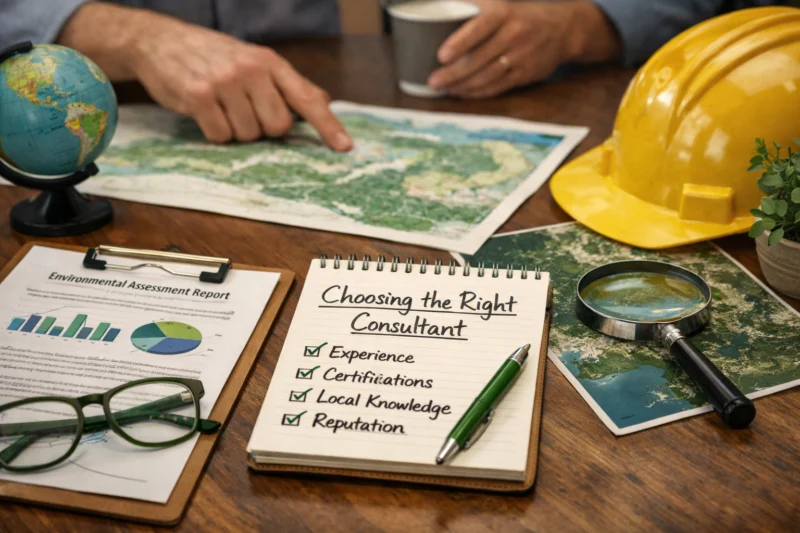
Deeper nuance: “more work” can create new risk if it isn’t aligned with purpose. For example, expanding beyond the needed scope can introduce findings that require additional interpretation, sampling, or stakeholder explanations—potentially delaying your project. The right consultant will recommend the minimum evidence necessary to support your decision while acknowledging what the evidence can and cannot say.
Failure modes to watch for early include vague methodology (“we use the latest tech”), boundary confusion (“we’ll investigate everything”), and an inability to explain next steps tied to site-specific evidence. Another red flag: when proposed work doesn’t match your project stage. A consultant may offer remediation design when you only need due diligence for financing readiness, or they may avoid sampling when your reuse plan clearly depends on receptor risk.
Verify credentials and technical competence with evidence-backed expectations
To choose an environmental consultant you can trust, verify competence through methodological transparency and quality management—not only through titles, memberships, or “green” labels. The defensibility of the work product depends on how consistently they apply standards, document evidence, and manage uncertainty.
Start with baseline qualifications that match the task. Ask about relevant professional experience, familiarity with local and state regulatory expectations, and how their team qualifications align to your property type. For example, a Phase I ESA should be handled with expertise in site history research, interviews, and evidence interpretation. For projects that progress to Phase II, you should expect sampling design competence, understanding of contaminant pathways, and the ability to translate findings into decision-ready recommendations.
Methodological transparency is non-negotiable. A good consultant should clearly explain how they conduct site investigation, interpret findings, and determine next steps. They should distinguish what is known from what is inferred, and show how conclusions connect to specific record sources, field observations, and limitations. If they can’t explain their reasoning in practical terms, you’re more likely to receive recommendations that feel “confident” but are difficult for others to validate.
Quality management also matters. Inquire about internal QA/QC, peer review practices, document control, and how they handle corrections when issues are identified. This is where “green ally” selection becomes real: a consultant with strong QA/QC is better positioned to avoid errors that can affect reliance, financing decisions, or regulator confidence.
Standards named for 2026 defensibility expectations include ASTM E1527-21 for Phase I ESAs and All Appropriate Inquiries under 40 CFR Part 312 (AAI). ASTM E1527-21 is widely used in practice to structure what a Phase I ESA should include and how it supports defensibility of findings and reliance. In certain contexts, AAI expectations influence what documentation and process elements may be required to align with protections tied to AAI requirements. Your goal is not to become an expert overnight, but to verify the consultant understands what these frameworks expect and how they translate them into clear reporting.
Deeper insight: credentials alone don’t guarantee quality. Ask for an example where their recommended next step prevented a costly misinterpretation—such as clarifying an ambiguous indicator, reconciling conflicting records, or adjusting the field approach based on receptor sensitivity. A common guide mistake is focusing only on “who is certified” instead of “how they ensure conclusions are evidence-based.”
Compare tools and technologies by decision impact, not novelty
Modern fieldwork can strengthen environmental conclusions, but the best way to choose a consultant is to evaluate how tools improve decision-making. Ask what tools they use, how outputs feed into conclusions, and how they handle uncertainty—not whether they simply “use the latest tech.”
Start by asking about their workflow and why each tool matters. Common tool categories include GIS mapping for context and spatial patterns, GPS/field data capture for accurate documentation, drones for access-limited imagery, Ground Penetrating Radar (GPR) for subsurface indications, and digital workflows that improve traceability from field to report. Equally important is sampling strategy design: tool outputs should influence where and how samples are collected, and sampling should be justified based on risk hypotheses and regulatory goals.
How it works in a real project: suppose historical records suggest an underground tank or fill-related uncertainty. GIS and historical research can guide where to focus field observations; targeted field data capture can confirm evidence boundaries; and advanced methods like GPR may help decide whether sampling locations should be adjusted. Then, analytical results are interpreted with limitations clearly stated. A consultant who treats advanced tools as evidence—not as proof—will communicate what the tools can indicate and what still requires confirmatory sampling.
Tradeoffs or limitations deserve explicit attention. Advanced tools can create false confidence if interpreted without proper context, calibration, or experience. Tool-first proposals can also bloat scope, increasing costs and potentially generating ambiguous findings that create additional work. The right approach starts with risk questions and intended decisions, then selects tools that address those questions.
Practical application: verify data management expectations. Ask whether they use versioned datasets, what metadata they capture, how they maintain chain-of-custody for samples, and how they ensure analyses are reproducible. If a regulator, lender, or third party requests clarification, you want a consultant who can produce the underlying evidence and documentation trail—not just a final narrative.
Deeper insight edge case: in areas with complex utilities, dense structures, or heterogeneous subsurface conditions, even high-end geophysics may be less definitive. A competent consultant will explain when a tool is likely to help and when it is better to rely on direct sampling or other evidence types. Another common mistake is accepting “we use GIS/GPR/drones” without asking how those outputs changed the investigation plan and conclusions.
Use a due-diligence script to evaluate scope, deliverables, and QA/QC
The fastest way to choose a strong consultant is to run the same due-diligence script across candidates and compare answers. You’re looking for clarity: how they define scope boundaries, how they document evidence, and how they manage quality so their report holds up to scrutiny.
Ask about project understanding first. A consultant should restate your project goal in plain language and confirm what decisions the deliverables must support (financing due diligence, redevelopment risk planning, compliance inputs, or other stakeholder needs). Then they should outline proposed scope and assumptions: what they will do, what they won’t do, and what triggers additional investigation. Unknowns will appear in nearly every project; the right consultant explains how they’ll handle them rather than pretending the site is fully predictable.
Next, require explanation of deliverables. Ask for report structure, what figures/maps/data tables they include, how they reference evidence, and how uncertainty is presented. For Phase I work, you should expect transparent documentation of record sources, interviews, and field observations. For later stages, you should expect sampling design details, data interpretation, and defensible recommendations that connect findings to risk and next steps.
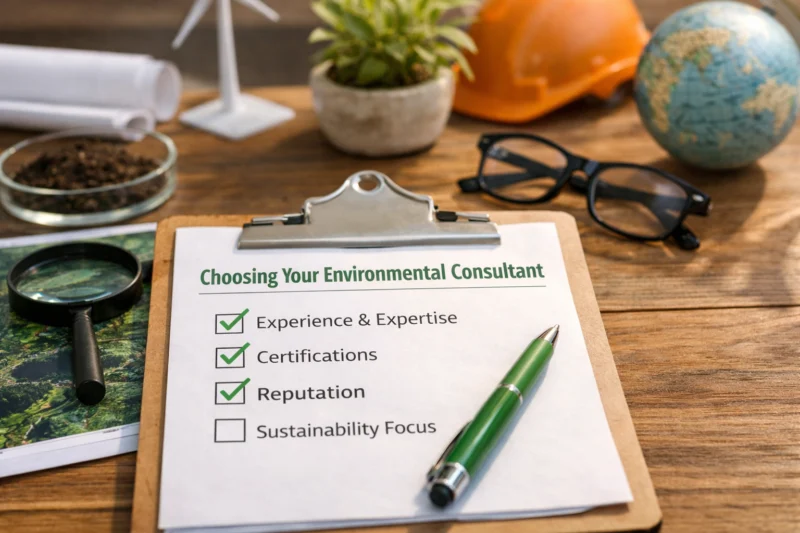
Stakeholder communication is also part of quality. Ask what gets shared, with whom (buyers, lenders, regulators, internal stakeholders, or project teams), and how they keep technical findings separate from marketing. A “green ally” should support stakeholder confidence by making technical explanations readable, not by overstating conclusions.
Finally, verify commercial terms and governance. Confirm billing model (fixed vs time-and-materials), schedule commitments, change-order triggers, subcontractor use, and who signs/owns the final work product. A common oversight is failing to define change orders and assumptions early, leading to disputes about what “extra” work should have been included.
Deeper insight: credibility checks reduce risk. Ask for anonymized, redacted samples of reports and evidence of peer review (for example, a description of internal review steps and how revisions are documented). Also ask how they correct errors discovered later and who owns updates. Most guides stop at general questions; the stronger approach is requesting evidence of how they maintain accuracy after publication, not only how they write reports.
Know the common pitfalls that cause “green” projects to fail
Many projects choose the wrong environmental consultant because they optimize for branding, not evidence. Avoid common pitfalls that lead to weak defensibility, misaligned scope, or misunderstandings with regulators and stakeholders.
One pitfall is selecting based on sustainability branding or “green certifications” without verifying technical rigor. Sustainability messaging can be legitimate, but it should never replace evidence standards. A strong consultant will align sustainability outcomes with real technical findings and clear documentation of uncertainty, sampling limitations, and recommendations.
Another pitfall is assuming any consultant can handle any stage. Phase I ESAs, Phase II sampling, remediation design, compliance support, and long-term monitoring often require different technical skills and different deliverable expectations. A consultant who can only do “one piece” may still be a good partner if governance and handoffs are clear—but you need to confirm accountability and integration across stages.
Pitfalls also include accepting vague methodology and unverifiable claims such as “we use the latest tech” without explaining how the tools improve decision-making. If you can’t connect methodology to site-specific evidence, you can’t evaluate reliability. Ignoring the human side is another issue: even with good technical work, unclear documentation and poor responses to third-party questions can delay decisions and increase costs.
Deeper insight edge case: conflicting evidence can happen—ambiguous historical records, non-unique release indicators, or uncertain interview information. A competent consultant documents uncertainty and proposes rational next steps (for example, additional focused records search, targeted sampling, or clarification through follow-up interviews). What most guides get wrong is framing conflicts as a “report style” issue instead of an evidence and decision issue: the consultant should explain how they prevent overreaching conclusions.
Choose among realistic options: specialized firms, multidisciplinary firms, independents, or in-house support
How to choose an environmental consultant often depends on who should own accountability for the full scope of work. Different delivery models fit different project needs, and the best choice balances depth, coordination effort, and governance.
Consider four realistic categories. First, specialized environmental consulting firms may be best for focused assessments where technical depth in environmental investigations and defensible reporting are paramount. Second, multidisciplinary engineering/environmental firms can be a strong fit when projects require breadth across permitting, design inputs, and integrated redevelopment planning. Third, independent environmental specialists can work well for targeted tasks—such as supplementing a specific record review gap or advising on a narrow technical question—if procurement includes clear deliverable ownership and integration. Fourth, in-house or managed-service approaches can make sense when organizations already have internal staff and need supplemental capacity, but they require robust oversight to maintain consistency and quality.
Tradeoffs are real. Specialized firms may reduce coordination burden for environmental work but could require additional partnerships for permitting or design. Multidisciplinary firms can streamline interfaces, yet sometimes blur accountability when work is subcontracted. Independent specialists can be cost-effective and highly expert, but they may not handle procurement governance end-to-end. In-house managed approaches can improve continuity, but you must ensure the consultant still meets evidence and defensibility expectations.
Procurement and governance deserve attention. You should ask how subcontractors are used, how work product ownership is handled, and what data rights you receive. Conflicts of interest can also matter: if a consultant profits from specific remediation vendors, governance should clearly separate assessment recommendations from business interests.
Deeper insight: alternatives can be risky on complex sites. A low-bid proposal for a high-liability industrial redevelopment may lead to gaps in records review, sampling design, or peer review. When comparing bids, evaluate beyond price using scope alignment, methodology clarity, QA/QC, assumptions, and evidence quality. The most common mistake is comparing only “line items” rather than how each proposal would produce defensible decisions.
Handle advanced edge cases with a consultant who builds defensibility, not just documents
For complex properties, the right environmental consultant is the one who can build an auditable decision trail and recommend defensible next steps under uncertainty. Edge cases require judgment, and your selection should be based on how that judgment is documented and communicated.
High-complexity triggers include redevelopment of older industrial sites, multi-phase transactions, vertically integrated stakeholders, undocumented fill, and sensitive receptors such as schools, healthcare facilities, or private water wells. These situations can produce ambiguous evidence and competing interpretations. A consultant who treats uncertainty as a first-class part of the work—rather than something to gloss over—will help keep your project on track.
Expect objections to arise during procurement. “Do we really need this assessment?” “Can’t we rely on prior reports?” “Will this delay our timeline?” A good consultant responds with evidence: what changed since older reports, what limitations existed, whether supplemental work is needed, and how updated information supports the decisions you’re making now. They should also explain how they would structure reporting to fit financing, permitting, or risk management needs.
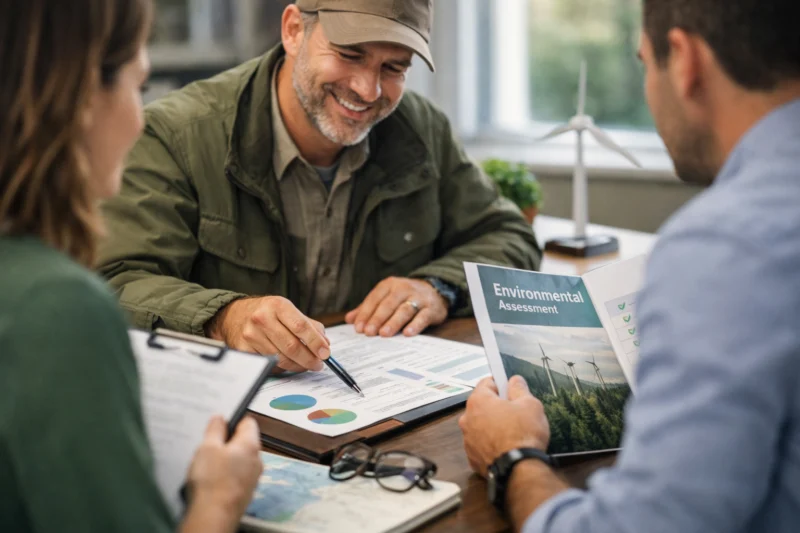
Defensibility is a practical concept: your documentation should let a third party understand what was known, what was assumed, what sources were used, and how uncertainty was handled. Ask how the consultant builds this defensibility. Do they maintain clear field documentation (notes, photos, GPS coordinates), data capture procedures, and evidence cross-references? Do they run peer review and correct errors in a controlled manner?
Deeper insight edge case: borderline findings. For example, results may be slightly above action thresholds or indicate a possible release pathway that is not fully confirmed. A competent consultant recommends next steps based on risk-based reasoning—such as additional targeted sampling, revised receptor assumptions, or other confirmatory work—rather than either overreacting or dismissing signals without support.
Keep selection from stalling by planning coordination, documentation, and scope changes
Even the best consultant can cause delays if coordination logistics, documentation expectations, and change-order triggers are not handled upfront. Choosing your green ally includes selecting someone who runs the project in a way that keeps decisions moving.
Start with scope creep prevention. Ask how change orders are triggered and how additional work is justified. For example, if initial records research reveals a data gap or if field conditions differ from assumptions, a good consultant will document why expanded work is needed and what decision it supports. This reduces surprises and protects both parties from disputes.
Next, clarify “who coordinates what.” Environmental investigations depend on access logistics, sampling windows, site rules, and timely stakeholder input. Ask for a clear point of contact, how they schedule fieldwork, how they communicate sampling plans, and what they need from you to avoid missed windows. You want a consultant who can align field teams, reporting teams, and client stakeholders without losing technical ownership.
Documentation quality is another selection criterion. Fieldwork produces raw evidence that must be captured consistently—field notes, photographs, sample identifiers, and chain-of-custody when sampling is involved. Ask what good documentation looks like during the investigation and how they ensure the final report reflects what occurred in the field.
Finally, coordinate with other professionals without losing clarity. Your consultant will likely work alongside attorneys, lenders, architects, engineers, and surveyors. A good consultant defines how they communicate technical findings, how they respond to third-party questions, and how they protect the integrity of the technical work product.
Deeper insight: disagreements can happen within teams and across stakeholders. Ask how the consultant resolves inconsistencies between field observations and reporting conclusions. What most guides skip is that these internal disagreements should be managed before delivery; otherwise, you may receive inconsistent recommendations that undermine defensibility.
Frequently Asked Questions About Choosing Your Green Ally: Top Tips for Selecting the Right Environmental Consultant
What should I ask an environmental consultant before signing an agreement?
Ask for a clear scope that ties deliverables to your project decisions, including what they will do, what they won’t do, and what assumptions they’re relying on. Require an explanation of methodology and QA/QC, including peer review and document control. Also confirm how change orders work if unexpected site conditions or evidence gaps appear.
How do I know if the consultant’s “green” approach is actually evidence-based?
Look for concrete links between their methods and the decisions your project needs, such as how tool outputs guide sampling locations or how uncertainty is documented. Ask what sustainability claims are supported by technical findings and which statements are strictly general marketing. A credible consultant can explain limitations without downplaying results.
Is a Phase I environmental site assessment always necessary for every project?
Not every project requires a Phase I ESA, but many property transactions and financing-related due diligence efforts do. The decision often depends on property history, risk level, and what your stakeholders require for risk management. A competent consultant can explain what they would verify first before escalating to Phase II work.
What does ASTM E1527-21 mean for the quality and defensibility of an assessment?
ASTM E1527-21 is a widely applied framework for what a Phase I ESA should include and how it should be structured to support defensibility. In practice, it shapes reporting expectations for records review, interviews, field observations, and how limitations are communicated. You can ask how the consultant aligns their process to the standard’s requirements.
How does 40 CFR Part 312 (AAI) relate to selecting an environmental consultant?
AAI under 40 CFR Part 312 sets expectations for All Appropriate Inquiries in certain contexts, and it can influence documentation and process elements expected from the consultant. When AAI is relevant, your consultant should be able to explain how their Phase I practices align to those requirements. This includes transparency on sources, limitations, and evidence used for defensible conclusions.
Can I rely on older environmental reports, and what should I verify?
You may be able to rely on older reports in some situations, but you should verify their recency, scope, and limitations—and assess what changed since they were created. A good consultant will review what sources were used, whether the site condition likely changed, and whether supplemental work is needed. They should also explain how they document reliance for your stakeholders.
What’s the best way to compare two proposals when scopes aren’t identical?
Compare proposals by deliverables first, then by methodology, assumptions, and QA/QC, not by price alone. Ask each consultant to reconcile differences in scope and explain why their approach fits your decision endpoints. If one proposal is broader, ask what added evidence you’d actually gain and how it would change outcomes.
How do I choose between a specialized environmental firm and a multidisciplinary engineering firm?
Choose specialized firms when you need deep environmental investigation expertise and defensible reporting for a specific environmental scope. Choose multidisciplinary engineering/environmental firms when you also need integrated permitting or design inputs and want fewer handoffs. In both cases, verify accountability, subcontractor transparency, and QA/QC governance.
What should I look for in the report deliverables to ensure they’ll hold up to scrutiny?
Look for evidence references tied to specific record sources and field observations, clear maps/figures/data tables, and an honest discussion of uncertainty and limitations. Ask about QA/QC statements and whether the consultant documents peer review. Strong reports make it easy for third parties to follow the evidence trail and understand how conclusions were reached.
How do I handle conflicting findings or unclear site history during an assessment?
The consultant should document uncertainty, explain why evidence conflicts, and propose rational next steps rather than forcing premature conclusions. Ask how they treat ambiguous historical indicators and how they decide whether further sampling or record research is warranted. You want defensible reasoning that keeps stakeholders aligned on the next decision.
Conclusion: shortlist your green ally using evidence, scope fit, and defensible reporting
Choosing the right environmental consultant comes down to three practical checks: match the scope to your project risks and goals, verify competence through evidence-based methods and QA/QC, and compare deliverables based on how they support defensible decisions. When you follow this framework, you avoid the trap of picking a firm for branding instead of picking a firm for outcomes.
As you shortlist candidates, ask for the same due-diligence script, request anonymized redacted report samples, and confirm how their process aligns with defensibility expectations such as ASTM E1527-21 for Phase I ESA work and AAI under 40 CFR Part 312 where relevant. Then evaluate their modernization thoughtfully: tools like GIS, GPR, drones, and digital workflows should strengthen the decision trail, not replace it with buzzwords.
Your next step is straightforward: shortlist 2–3 consultants, run the same question set, and align on scope and deliverables before committing. If you do that, your “green ally” is much more likely to produce a report that stakeholders can rely on—and a project pathway that supports both risk reduction and credible environmental outcomes.
Updated August 2026